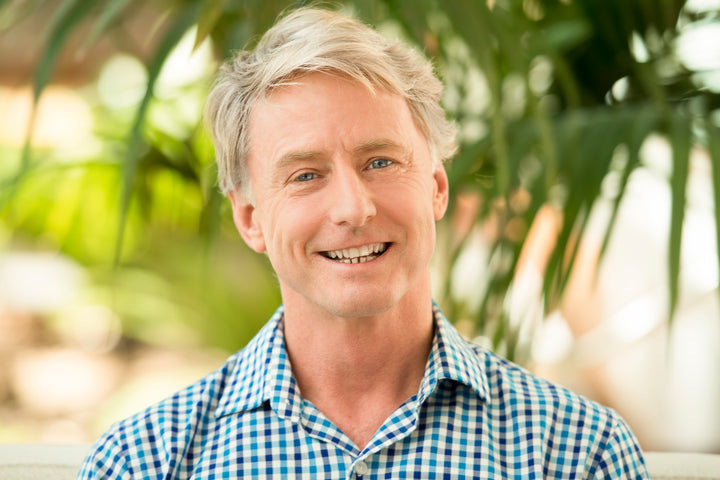
Meet Paul Keogh: Founder of Core Botanicals®

Posted by Beck Keogh on

Welcome to the Core Botanicals® blog. 

Here we will explore a range of topics that we hope our community will enjoy for information, entertainment and to assist you on your health journey.

In our very first post, we’d love to tell you more about our brand and our founder, Paul Keogh.

Paul’s experience in herbal medicine spans over 35 years as a founder of brands including Core Botanicals®, Fusion Health® and Oriental Botanicals® and as a qualified naturopath and medical herbalist with extensive clinical experience.

In Byron Bay in 1999, Paul cofounded Fusion Health® and Oriental Botanicals®. After selling these brands in 2016, Paul’s passion for developing incredible Herbal Medicines only continued to grow.

This dedication to excellence and innovation has culminated in the launch of Core Botanicals®, whose goal is to provide you with the very best products to assist with your whole-health. We know this is a unique journey for each individual and we hope that we can help you with yours.

The Core Botanicals® range is a showcase of Paul’s knowledge, experience and love for his craft.

As well as having an impressive resume and track record of developing incredible Herbal Medicine, Paul is a loving husband to Amrita, father of five beautiful kids, Yoga enthusiast and keen traveler.

Paul, can you please tell us a bit about your why? Why this industry, why this brand and why now?

The “why” of my story goes back to my early experiences as a practicing naturopath in Alstonville, (Northern Rivers of NSW). Having sincerely and deeply studied natural medicine for 6 years - before qualifying as a medical herbalist and naturopath in 1986 - I felt strongly motivated to apply what I’d learnt, to share nature’s healing potential with others. I especially sought confirmation that herbal medicine was still relevant to our modern age and not merely an historical curiosity. 

As I’m sure is common knowledge, when you feel a strong aspiration or motivation, reality quickly lets you know if you’re fooling yourself. And to my great surprise, not only did my immediate family and friends benefit from my practice of holistic medicine, but the community - which wasn’t ‘alternative’ per se - embraced it. Not only did my clinic get progressively busier but I started writing a weekly health column for the local newspaper and presenting a weekly live, radio  talkback fielding questions from a broad cross section of listeners.

My experience over many years has reinforced that a successful practice pivots on identifying genuine needs and providing effective solutions. For me, the former skill is honed by maintaining an open mind and attention towards others - my patients and people taking my medicines - while the latter is largely dependent on access to high quality and potent herbal extracts and nutritional supplements. So, I started laboratory testing the quality parameters of my ingredients including potency, and manufacturing my own botanical extracts. 

Little-by-little, I confirmed that herbal medicines could have profound clinical effects but only by optimising the combination (formulation/prescription) and assuring the purity and potency of all ingredients. Eventually, the popularity of my most successful botanical formulas led me to list them with the Australian Therapeutics Good Administration (TGA) and commercialise them through the health food and pharmacy sectors. 

After dedicating 12 years to clinical practice, then another 16 years sharing my medicines with tens of thousands more people - supported by qualified practitioners working in retail healthcare (health food stores and pharmacies) - I’ve recently been inspired to further research and develop my medicines. 

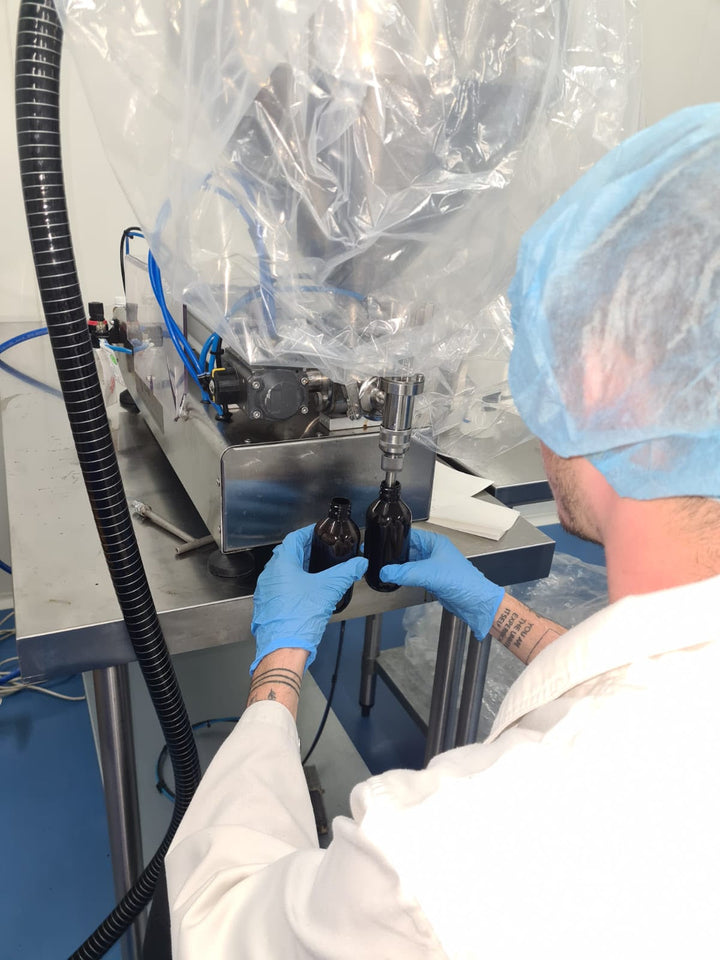
The ‘why’ of this effort was to see whether I could create integrated Chinese and western herbal medicines that meet modern standards of evidence, requiring the full traditional dosage for each ingredient. This wasn’t an easy task even with 35 years of industry experience. Ultimately, I needed to develop a special extraction process that concentrates the active botanical compounds to a strength (1500mg/mL) three times greater than the usual strength (500mg/mL) of liquid medicines available in Australia, and overseas.

Having successfully developed the manufacturing process, it’s wonderful and super exciting to see my vision come to life in Core Botanicals new, high-strength, high-quality herbal medicines. 

It’s a family business and I’m thrilled to see Core Botanicals come to fruition.

I’ve put a lot of passion and meticulous care into the formulation of these products. My hope is that consumers can enjoy the benefits of these new formulas for years to come.

Where do the ideas for your formulations come from?

The inspiration for most of my formulas came out of paying careful attention to my patients’ needs, disclosed to me during my years in clinical practice, between 1987 and 1999. 

In 1998, I dedicated myself full-time for one year to research and develop my ideas and clinical formulas. During this time, I listed the most widely applicable and effective medicines for common health problems on the Australian Registry of Therapeutic Goods (ARTG), which is administered by the Therapeutic Good Administration (TGA). 

In the early 2000s, these medicines were made available to consumers under two brands, Fusion Health® and Oriental Botanicals®. Over the following 16 years, with the help of dedicated naturopathic staff and retail health professionals across Australia, my range of formulas expanded to more than 55 products, and grew in popularity to be amongst the most respected herbal medicines and nutritional supplements in retail healthcare, especially health food stores but also pharmacies. 

Without the initial creative inspiration from my patients and the subsequent support from retail health professionals, my formulations would never have evolved into what they are today. In fact, the new Core Botanicals® range of concentrated, herbal extracts represents the pinnacle of my 35-year career in formulating and producing quality herbal medicines that deliver the benefits of traditional multi-herb formulations, in a convenient “all-in-one” liquid extract form.

What should customers expect from Core Botanicals®?

My continuing motivation is a striving for excellence in the production of herbal medicines with real therapeutic potential. To achieve this, I’ve integrated the ancient wisdom of traditional Chinese medicine (TCM) with the modern approaches and manufacturing practices of Western herbal medicine. 

When taken as directed, people should expect results in line with the indications on the label of each and every Core Botanicals® medicine. 

Of the first four products in the Core Botanicals® range, which one is your favourite and why?

Although every formula in the Core Botanicals® range has unique properties, I’ve always had a soft spot for the ASTRADEFEN® formula. This is because it was my very first clinical experience of the potency of traditional Chinese medicine, for which there was no equivalent in Western herbal medicine. 

Back in 1992, my teacher and mentor Associate Professor Denis Stewart, introduced me to the original version of this profound immune tonic. Called Astragalus 8 back then, hundreds of my patients subsequently benefited from taking this traditionally-evidenced combination of eight Chinese herbs including Astragalus to promote immune defence, improve immunity and help reduce the occurrence of common colds, and Ginseng to assist with recovery from illness. 

The results blew my mind and motivated me to seriously and deeply explore the power and potential of traditional Chinese medicine for my patients. The rest, as they say, is history because I went on to develop many more integrated Chinese and Western herbal formulas, including those now available in the Core Botanicals® range. 

Why did you choose for these products to be Made in Australia?

In a nutshell, Australian herbal medicine standards are world-leading with internationally respected, rigorous regulatory controls and manufacturing systems. 

In addition, the use of traditional Chinese medicine (TCM) goes back to the early settlement of Australia by Europeans and especially from when Chinese miners arrived on the Australian gold fields around 1854. By 1911, Chinese herbal medicines were sold in Australia with English labels and directions. 

When around 1989-1990 the Australian Therapeutics Goods Administration (TGA) established a registry of permissible herbal ingredients, hundreds of Chinese herbs were added. Finally, since my 35 years of industry expertise was gained in the Australian context, I’m confident that Australia has the necessary systems and controls to support the continuing development of my vision to provide herbal medicines of the highest quality, safety and efficacy.
Newer Post →

Core Botanicals blog.

RSS
Why 86% of you come back (and the 2000-year-old secret)

Why 86% of you come back (and the 2000-year-old secret)

A Note From Paul - medical herbalist, naturopath and founder of Core Botanicals®

I was recently looking at some data from our online store, and one number stopped me in my tracks: 86%.

That is our returning customer rate. In a world of "quick fixes" and endless supplement options, seeing that almost 9 out of 10 people come back to Core Botanicals  is the ultimate feedback. It tells me that what I set out to do - create potent, result-driven therapeutics - is actually working for you.

So, let me pull back the curtain on why Core Botanicals  formulas are different.

In the traditional world of herbal medicine (especially Traditional Chinese Medicine or TCM), getting a therapeutic dose often meant boiling a large quantity of herbs on the kitchen stove.

 This process is called decocting which in the end produces about 750 mL of dark, bitter, "smelly"liquid that you must choke down throughout the day. This system does work, but let’s be honest, it’s a lot of effort, and it doesn't exactly make your kitchen smell like a day spa.

At Core Botanicals, we’ve modernized this 2000 to 3000-year-old process.

For example, take our ALLERDEFEN medicine which was first formulated more than 1800 years ago. The basic seven herb formula has been used for generations to defend the spaces between the interior and the exterior of the body. In modern terms this function relates to the immune system defences and to “spaces” the likes of the eyes, nose and throat which can manifest
symptoms identified in Western medicine as allergic rhinitis or hayfever.

Core Botanicals takes the very same traditional herbal ingredients and extracts them using both the modern hydroethanolic system and the ancient aqueous decoction process to produce a high-potency medicine equivalent to at least 1.5g of dry herb per millilitre of extract.

Not only do we save people the inconvenience and trouble of preparing Chinese medicine the traditional way themselves, but we concentrate the daily dose of 750 mL of decoction into a convenient, reasonably palatable, high-potency daily dose of approximately 40 mL or a little over 5% of the decoction volume. No "smelly vapours" in the kitchen - just clinical-strength medicine in a highly absorbable liquid form that’s eliminated the hard work and inconvenience from taking Chinese herbal medicines.

When you see the statement "concentrate liquid herbal extracts" on our labels or “potency before profit” in our marketing, these are not buzz-phrases. They represent our unequivocal commitment to provide medicines that are consistent with traditional indications and dosages so you can experience the power of ancient Chinese medicine in a modern, convenient, liquid form.

Paul’s Clinical Tip: If you’ve tried dry herb preparations in decoction, capsule or tablet forms for the relief of the symptoms of hayfever (allergic rhinitis) including watery eyes, dripping nose, sneezing and itchy throat without satisfaction, maybe you’d like to try our high potency liquid ALLERDEFEN medicine. Many of my patients and customers not only report significant relief of symptom but also reduction of recurrence, which exemplifies an important TCM principle of
treating both the branch (symptoms) and the root (predisposition).

To your health,
Paul Keogh 
Founder, Core Botanicals

Read More
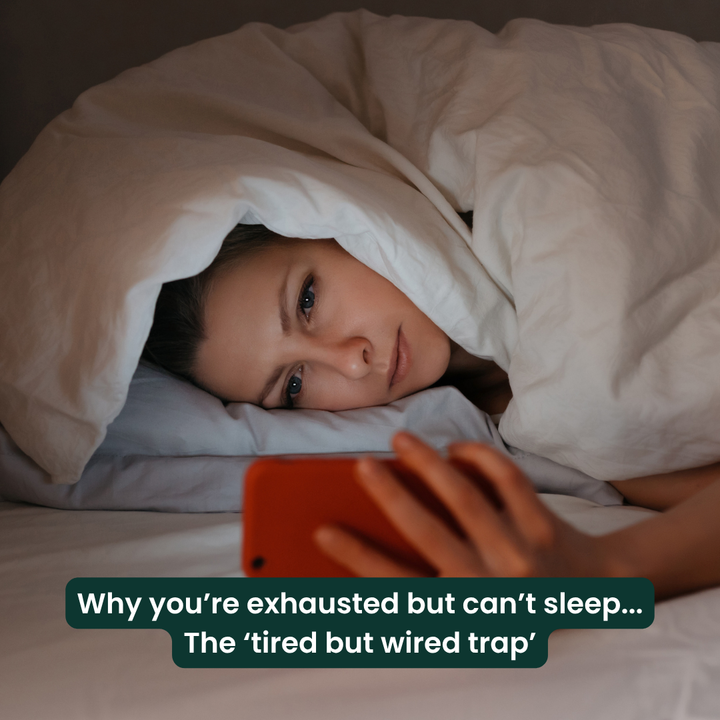
Why you’re exhausted but can’t sleep

Why you’re exhausted but can’t sleep

The "Tired but Wired" Trap

A Note From Paul - medical herbalist, naturopath and founder of Core Botanicals®

In my clinical experience, one of the most common complaints I’ve heard over the last three decades is some variation of: "Paul, I’m exhausted all day, but as soon as my head hits the pillow, my mind starts racing."

I call this the "Tired but Wired" trap. It’s a hallmark of our modern, fast-paced, goal-oriented world. Consequently, we’re living in a state of "sympathetic dominance" where our nervous system is stuck in "fight or flight" mode, even when we’re just sitting at our desks or trying to sleep. The thing that’s not well known about the "fight-or-flight" or sympathetic nervous system (SNS) mode is that it’s only half of the autonomic nervous system (ANS); the other half is called the “rest-and-repair” or parasympathetic nervous system (PNS), which balances the sympathetic nervous system and together optimise the automatic functions of the ANS.

A great way to appreciate the differences is to imagine you’re picnicking under the iconic African “tree of life” (Baobab Tree) after a tiring safari on the savanna. You relax as you take in the scenery and recover as you enjoy some nourishing provisions. In this context, your parasympathetic mode is dominant. There you are feeling high on life when suddenly your sympathetic mode kicks in as a pride of lions approach. As they do, your appetite is replaced by fear and anxiety, and your bliss is banished by stress hormones surging through your body to raise your blood pressure and heart rate in readiness to fight for your survival or run for your life. All this happen below conscious control as part of our evolutionary responses governed by the ANS. So, although we’re no longer on the savanna, our modern cities can still feel like the jungle.

From a Traditional Chinese Medicine (TCM) perspective, the ANS is primarily understood through the lens of Yin-Yang balance, where the SNS is associated with Yang (activity, growth, defence, exertion) and the parasympathetic system with Yin (passivity, digestion, rest, repair). Chinese herbs and acupuncture act as dynamic regulators that harmonize these systems and correct imbalances associated with sympathetic dominance such as mild anxiety, irritability, restlessness, excess nervous energy and poor sleep.

In contract to the use of sedative drugs that "knock you out" to reduce anxiety, Western Herbal Medicine seeks to correct sympathetic dominance with Adaptogens.

Adaptogens are a unique class of herbs that help your body adapt to stress. They don't just control symptoms; they work on the primary mechanisms that govern your body’s response to stress including the ANS and the command and control, hormonal system called the Hypothalamic-Pituitary-Adrenal axis (HPA). The HPA and ANS act as complementary, highly coordinated, and physically interconnected systems that calibrate your body’s response to stress.

In summary, the ANS provides a rapid, immediate response (within seconds) through sympathetic ("fight-or-flight") activation and parasympathetic (“rest-and-repair”) withdrawal, while the HPA axis provides a slower, sustained, hormonal response (over minutes and beyond) via cortisol release from the adrenal glands. However, prolonged activation of the “stress response” can lead to a "disconnection" or "disequilibrium" between these two dynamic, interrelated systems leading to many conditions modern humans experience in today’s version of “life in the jungle”.

For this very common "Tired but Wired" state, I rely heavily on two of my favourite Adaptogens: Ashwagandha (Withania) and Sacred Basil (Holy Basil). In our STRESDEFEN formula, we use these highly respected Ayurvedic Rejuvenating tonics herbs which help the body “adapt to stress” through more efficient and effective responses, together with two powerful Chinese herbs China Root and Chinese Senega that "soothe the spirit" (Shen) to calm the mind, aid mental relaxation, ease restlessness and reduce excess nervous energy.

In a nutshell, the goal of this dynamic approach is to calm the "wired" nervous energy while simultaneously rejuvenate the "tired" energy reserves.

What sets our formulas apart is the potency. Most liquid medicines you find on the shelf are tinctures (1:2 or 1:5) not extracts (1:1 or 1.5:1) with their strengths varying widely. Core Botanicals has developed a special dual-phase extraction system to produce a 1.5:1 extract strength that’s three times the potency of a 1:2 tincture. This means you’re getting three times the dry herb equivalence per mL, compared to many leading brands of 1:2 strength liquid medicines.

So, when you’re stuck in a stress cycle, it’s important to take the right herbs at a dose that can actually “move the needle”. I've also found that fresh air, moderate exercise and meditation support herbal medicines that regulate and rejuvenate your nervous system. A simple approach is to get outside and breath in a dose Nature’s most effective tonic combination: fresh air and sunshine. Research demonstrates this can have positive effects on moods and wellbeing by boosting blood oxygen and Vitamin D levels.

Paul’s Clinical Tip: If you find yourself "spiralling" in the mid-afternoon, that’s usually when your cortisol is fluctuating. Try a dose of STRESDEFEN around 3 PM instead of drinking coffee or coke (both caffeine hits) to help reduce that afternoon brain fog and energy slump. Also, try another dose around 9 PM to get you ready for sleep and prevent the "second wind" that keeps you awake.

To your health,
Paul Keogh 
Founder, Core Botanicals


Read More